显示标签为“led grow lights”的博文。显示所有博文

2018年11月7日星期三

Analysis of The Technical Needs of Plant Lighting Users

Types of Plant Lighting
 
At present, the types of plant lighting include an incandescent lamp, a halogen lamp, fluorescent lamp, high-pressure sodium lamp, and LED lamp. LED, with its advantages of high luminous efficiency, low heat, small size, and long life, has obvious advantages in the field of plant lighting. According to the data analysis reported, it is estimated that the size of LED growth lamp will account for 61% of the plant lamp market in 2020.


Current Situation And Development Trend of LED Growing Lights Market
 
At present, the plant lighting market is mainly concentrated in the Middle East, the United States, Japan, China, Canada, the Netherlands, Vietnam, Russia, South Korea, and other regions. Since 2013, the global LED plant lighting market has entered a period of rapid development. According to statistics, the global LED grow lights market in 2014 was $100 million, and the market in 2016 was $575 million, forecast to grow to $14.24billion by 2020, and the annual compound growth rate is over 30%. The global plant factory plant lamp market is developing rapidly, and the scale is predicted to be as high as 19120000㎡  by 2020.


The Application Field of Plant Lights
 
The field of plant lighting, as one of the fields of agricultural lighting, has developed rapidly in recent years. Light plays an important role in the growth and development of plants in two aspects: as energy, it participates in the photosynthesis of plants and promotes the accumulation of plant energy; and as a signal, it regulates the growth and development of plants, such as the growth of buds, flowers, and stems. From this perspective, plant lighting can be divided into growth lighting and signal lighting, while growth lighting can be divided into full artificial light growth and supplementary light from the use of artificial light. Signal lighting can also be divided into buds, flowering, colored lights and so on. From the field of application, the field of plant lighting mainly includes seedling (including tissue seedling and seed seedling), garden landscape, plant factory, greenhouse planting and so on.
 
User's Technical Requirements of Plant Lights
 
Plant lighting is a comprehensive and cross-disciplinary industry, and the growth of plants is also a result of multiple factors. The technical requirements of plant lighting users concern not only the lighting part but also other factors. The technical requirements of plant lighting users will be analyzed from two perspectives below.
 
1.Analyze user technical requirements from the perspective of the patent layout
 
According to statistics, the first five IPC technical categories of patents applied in the application field of LED plant lighting are shown in the figure, respectively
 
(1) f21y101/02: involving miniature light sources, such as light-emitting devices or lighting systems of light-emitting diodes;
 
(2) a01g9/20: use light to grow flowers, vegetables or rice in an enabling breeding ground;
 
(3) F21s2/00: non-portable lighting device or its system with modular structure, etc.;

(4) A01G7/04: electric or magnetic treatment of plants to promote their growth. From the perspective of patent layout, the improvement of the miniature light source, lighting system, planting scheme, structural modularization, intelligent device, and system silly are the trends of patented layout, which largely reflects the technical requirements and trends of users of plant lighting.
 
 
2.Analyze from the user's perspective
 
The acceptance of plant lighting users to the industry has greatly influenced the development of the industry. For users of plant lighting, the cost of investment and use is the key issue.
 
2.1The Cost of LED Grow Lamps
 
The cost of LED lamps is directly related to the user's investment cost. Although the energy saving and spectrum advantages of LED lamps are obvious, the price of LED lamps is higher than that of other plant lighting lamps. Take cannabis lamps, for example, the same 600w lamp, the high-pressure sodium lamp plant lamp set price is about 300USD, and the LED plant lamp is about 2000USD. Most customers are more willing to start with small power lamps.
 
In the cost of lamps and lanterns, besides the outer casing of the lamp, drive cost, the cost of the lamp bead is compared with the ordinary lamp bead, the price is higher. Take the 2,835 lamp beads of 0.2w for example, the price of the plant lamp beads is about 4-7 times that of the general lamp beads. Of course, the price trend of LED beads is decreasing year by year, and the price of materials such as substrate materials, phosphor powder, and epitaxial wafers is decreasing year by year. The cost of chip manufacturing is also decreasing with the increase of production efficiency (upgrade of 2-inch to 4-inch wafers). The cost of the beads will fall to about 40 percent in 2015 in 2020, according to a report by the chi research consultancy.
 
2.2 The Using cost of LED plant lamps
 
Power cost and power performance are the main concerns of every plant lamp user. Power performance refers to the ratio of power input to output per unit of consumption. The output here is to point to output and quality two respects.
 
2. 2. 1 Light
 
As one of the main factors affecting plant growth and development, light spectrum, light intensity, and photoperiod affect plant growth and development. The light effect is closely related to power performance.
 
(1) spectrum
 
Wavelength range of 300 ~ 800 nm radiation called plant physiological active radiation (physiologically active radiation), but UVB (280-320 nm) and UVc (220-280 nm) band for plant growth and development of the secondary metabolites (produce). On the wavelength type of plant lamp beads, Osram introduced 450nm, 660nm, 730nm, 617nm, 623nm and 6000k white lamp beads. EDIson launched 39-410nm, 415-435nm, 450-460nm, 520-535nm, 585-600nm, 620-630nm, 660nm and 725-745nm light beads. On the monochrome lamp bead, the physiological effective radiation wavelength of the plant is basically covered, plant lamp manufacturer produces different applicable spectrum by different lamp bead combination. However, lamp beads in the UV band, or on the basis of technological reasons, or on the basis of cost, have not been widely used in plant lighting products like other wavelength lamp beads.
 
Although the spectrum can be diversified by a monochromatic lamp bead array, or by chip excitation phosphors. However, different plant species, different stages (seedling growth, vegetative growth, reproductive growth, flowering induction), and different application scenarios have different spectra of requirements.
 
There are many kinds of plants for users of plant lighting, such as red quinoa, salad lettuce, diced vegetables, dragon fruit, passion fruit, strawberry, tomato, cantaloupe, rose, okra, dendrobium, clematis, tissue seedling, tobacco seedling, sweet potato seedling, okra, hemp, and succulent plants. Their recognition and differentiation of spectra are not necessarily professional, but they are primarily concerned with the data of planting effect. Some users are interested in plant lighting products that mimic the sun's rays and think the spectrum similar to the suns would be more widely applicable. This is the compromise made by customers to increase energy consumption when the diversity and precision of the spectrum fail to meet customer demands.
 
(2) Light Intensity
 
The effect of light intensity on plant growth has two points, the compensation point of light and the saturation point of light. For users, the saturation point of light is not necessarily the best light intensity in the production application, which needs to consider the growth rate of plants and balance the production cost. Different crops and different stages have different needs for light intensity. The user needs the plant lighting manufacturer to provide the best light intensity and the combination and suspension mode needed to achieve this light intensity, and most plant lighting manufacturers do not have the technical reference.
 
In light intensity, the demand for plant lamp as a signal is lower than that of growth lamp as energy. As a signal lamp, its optimum light intensity is much lower than that of growth lamp, and its action light intensity (PPFD) is at 3-30 mmol/m2. S.
 
(3) Luminous Effect
 
Luminous efficiency is the ability to convert electrical energy into luminous energy. The higher the light efficiency, the higher the power performance and the lower the power cost. The plant lighting user is concerned with the full lighting effect (units: pressure mol/J). As a plant lamp supplier, the lighting effect of the plant lamp should be improved by the design of the lamp. Red light (660nm) beads are available for up to 3. 17 moles/J, and blue light (450nm) at 2. 5 moles per J. And in the purple light band light pearl effect is low. Mixed color lamp bead is the highest luminous effect is 2. 5 moles per J.
 
(4) Use of Light
 
Plant lighting, which replaces sunlight, is fully controllable. The illumination time, intensity and spectrum of a day are controllable. How to improve power performance by controlling the way light is a problem that most users of plant lighting pay attention to. Total photosynthetic radiation (DLI) refers to the total amount of sunlight accumulated by plants in 24 hours per unit area (per square meter). Plant lighting users, especially plant factory users, pay more attention to the "saturation value" of total photosynthetic radiation of plants to avoid the waste of light energy and electricity.


2. 2. 2 System Scheme
 
The characteristics of high input and high production cost require the high efficiency of crop production in plant factories. Different from the traditional planting environment, the environmental factors of plant factories are fully controllable, which is also the basis of the efficient production of plant factories. At present, the industry mainly realizes the efficient production of plant factories from the intelligent management system, expert planting technology, and automatic operation platform.
 
Intelligent management systems, such as plant intelligent control technology based on Internet of things, plant plant plant monitoring system based on PLC, plant control system based on an embedded platform. Through these control systems, online detection, remote access, program update and networked intelligent control of plant factory temperature, humidity, light, co2 concentration, nutrient solution Ec, pH, Do and other elements can be realized.
 
Expert planting techniques. The plant factory is different from the traditional planting mode. No matter it is someone from other professional fields, or someone from traditional agriculture, investing or managing the plant factory, the expert planting technical requirements and guidance is essential. The growth and development of plants is the result of the interaction of wind, light, water, nutrients, gas, and bacteria. At present, there are research data on photo temperature coupling, photo temperature CO2 interaction and nutrient element coupling, while more interaction schemes are rarer. These systems are all designed on the basis of interaction of growth factors, but more planting data is needed to support the formation of export schemes. To save labor costs, automated operating systems are also the focus of the industry
 
Others
 
In addition, plant lighting users have corresponding technical requirements for the waterproof level, luminescence Angle, and heat dissipation system of lamps, lamp life, spectral effective life, and light decay.
 
 
With the maturity of LED lighting technology and the decline of LED cost, many enterprises are moving from the fiercely competitive general lighting market to the field of plant lighting, and the technical demand for plant lighting will become increasingly clear.
《The Analysis of 2018 Plant Lighting's Market》
《Analysis Of The Development Prospect Of LED Grow Lights In 2018》

2018年10月30日星期二

The Problems In Greenhouse And How To Solve Them

Seasonal Problems

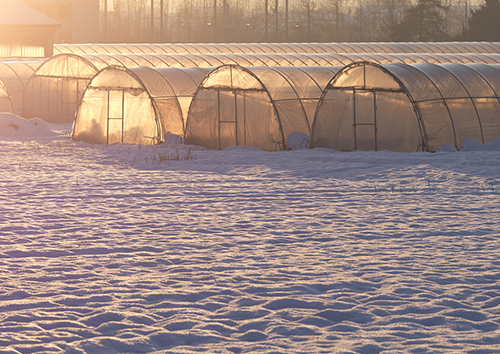
Growers use greenhouses to produce their crops in the first place to provide insulation and protection for plants grown in the greenhouses, but this artificial environment also has many problems. For example, for plants growing in a greenhouse, especially young plants, relatively short periods of high temperature or sun exposure can cause serious damage to the plants, so it is very necessary to take corresponding preventive measures. Ventilation and sunshade are the two main cooling methods in the greenhouse to ensure the normal growth of plants. When choosing a greenhouse that is suitable for growing plants, you should first consider whether the greenhouse is equipped with a fan. When the temperature inside the greenhouse increases, the fan can be used to adjust, so as to reduce the temperature inside the greenhouse.

Some plants have high light resistance and are relatively resistant to sun exposure, but many require a degree of shade to protect them from direct sunlight. There are many ways to protect the seedling from the sun. When the sun is strong in the afternoon, it can be shaded on the top or side of the greenhouse to avoid direct sunlight, and reduce the possibility of heat damage.

Low-Temperature Disaster

If suddenly encountered cooling, frost in the greenhouse will cause frost damage to the plants. Because of the complicated and changeable weather conditions, the occurrence of catastrophic weather cannot be predicted accurately and timely by relying on the weather forecast alone. The greenhouse needs to arrange the warm air blower or the warm air machine, the best can control automatically, when the frost occurs, the greenhouse internal greenhouse reduces, the warm air fan can carry on the warm air automatically, thus guarantees the greenhouse the plant to grow normally the need, but is not affected by the outside weather change. If cost and benefits are taken into account, you can also choose the most popular LED grow lights on the market.

About The LED Grow Lights:
《Why We Need LED Grow Lights》
《The Analysis Of LED Grow Lights Prospects For Development》

《Can Be Eaten The Vegetable Which Growa With The LED Grow Lights》

Condensate

It is a big problem that the humidity in the greenhouse is easy to produce condensation water. Humid, unventilated air environments provide ideal conditions for many germs, especially grey mold. Therefore, maintaining good air mobility is one of the key measures to reduce the occurrence of diseases. One of the reasons why the condensation water in the greenhouse is easily neglected is that in winter, in order to improve the internal temperature of the greenhouse, a heater is used, and the fuel will produce a large amount of water in the combustion process. In winter, the outdoor temperature is low, the ventilation in the greenhouse is not very good, and the air circulation is not good.


Greenhouse Space Planning

Overly burdensome management inevitably leads to problems or loss of interest. While you'll start out with a management plan, there are always problems that can overwhelm an inexperienced grower. Growers are often unaware of the large areas of greenhouses they choose to plant, resulting in too small an area. So when choosing a greenhouse, make sure you have enough space for future expansion. If you want to expand the production area, but cannot really expand the existing greenhouse space, then you can only choose the second greenhouse to supplement.

It is difficult to leave enough space in a greenhouse to store equipment and keep it clean, especially in a relatively small one. All the objects in the greenhouse should be well known and know how to properly plan the use of space. Use a waterproof case to prevent rust or damage. Chemicals such as pesticides need to be stored safely to prevent accidental damage to children or pets. Due to the lack of sufficient space, and the cleaning work in the greenhouse itself is not easy to do well, so the equipment and goods are put in order, which can also reduce the risk of diseases and pests in the greenhouse.

Prevention And Preparation In Advance

The problems of gardening in open fields inevitably occur in greenhouses as well. Only by understanding the problems that may occur in advance can we prevent them from happening in the future, reduce the potential risks and solve the problems that have occurred in a timely manner.

Daily Maintenance of The Greenhouse

A greenhouse is like a house we live in. It needs regular maintenance to keep it tidy. Generally speaking, it is to maintain the inside and outside of the greenhouse, including the structure of the greenhouse, heating equipment, ventilation equipment, water supply system, and the most important environmental maintenance of the greenhouse itself.

1. Routine Maintenance

The greenhouse needs to be constantly checked for damage. Glass greenhouses should be checked for integrity after strong winds. The greenhouse's skeleton structure also needs regular inspection. Bamboo and wood structure greenhouse needs to be painted regularly or anticorrosive treatment, repair damage at any time. Aluminum frame greenhouses, on the other hand, require no such work and are relatively cheap to maintain.

2. Clean

Cleaning the greenhouse on a regular basis can protect the greenhouse's skeleton structure. If the mulch of the greenhouse is not clean, it will reduce the intensity of light and affect the seedling growth. You can choose to do the overall cleaning before planting in spring or before planting in autumn.

External cleaning of the greenhouse is optional on a windy day. Clean the mulch with water. The water on the mulch will evaporate quickly in a windy environment to avoid watermarks. For the aluminum greenhouse, the dust can be collected easily under the window, which can be washed directly with a water pipe, and the dust can be removed gently with the setting tool.

The inside of the greenhouse needs more thorough cleaning, not only for the sake of a pleasant and clean working environment but also for the prevention and control of various pests and diseases in the greenhouse. Greenhouse cleaning is a very important part of greenhouse management, which effectively avoids many possible troubles.

When cleaning the greenhouse, make sure the power is off, turn off the heater, LED plant lights and other related equipment, and cover the socket. If outdoor temperatures are allowed, it is best to move plants, containers, and equipment outdoors, or keep plants in other greenhouses to prevent them from freezing. Take the time to examine each plant and remove the stumbles.

Used fertilizer and planting bags can be discarded, the ground leaves to clean up, weed. A comprehensive cleaning and disinfection of the greenhouse, including glass, walkways, and walls. Leave all the plants to dry and put them back in the greenhouse.

3. Equipment Inspection

Heaters, ventilators, and irrigation systems are very important and don't forget to check and maintain them regularly. There are also containers such as flower POTS and workshops that also need to be sterilized. The lighting system also needs a regular inspection to check if it is normal, and the lamp that cannot be used should be replaced in time.

4. Maintain The Planting Environment

In the warm and humid greenhouse environment, diseases and pests are very likely to occur and spread rapidly when given the opportunity. Therefore, it is very important to keep the environment in the greenhouse clean and tidy. Make necessary supports to the plants, trim off the points, etc., and weed the land in time.

Greenhouse cleaning is just as important as cleaning your house, but regular maintenance is just as important, making everything in the greenhouse work normally. If you can maintain regular maintenance, it will take less time each time.


Prepare

Winter is a very special time, because of the lack of light, cold weather and so on makes the growth of plants very difficult. At this time, we must pay close attention to the possibility of various problems, try to keep clean and tidy to reduce the possibility of various problems. Use tools to get plants through the winter.

You may also be interested in the following articles:
《7 Ways To Improve Your Greenhouse's Temperature In Winter》
《How To Improve The Output of Greenhouse Vegetables
》

2018年8月7日星期二

How to Raise the Succulent Plants?

In our home decoration, the indispensable is the green plants, and the succulent plants are the first choice for decoration. Succulents planted in the room can absorb carbon dioxide, release oxygen, purify the air, absorb radiation and so on. There are tens of thousands of succulent species. The most common succulents in our lives are Aloe Vera, Sedum, B-heart, Angel Tears, Yu Lu, Ming Yue, Hong Zhi Yu, etc. And now, let us together to learn how to raise good-looking succulent plants.


Prepare the Materials

1.Flower Pot
The pottery basin has good water absorption, and the problem of water pouring is not big. It can alleviate the negative effect caused by excessive watering, but the weight of the pottery basin increases after water absorption, which requires the flower stand to be firm. The permeability of the purple sand pot is between the pot basin and the porcelain pot. Generally, the succulent plant needs to use the purple sand pot. The purple sand pot needs to pay special attention to the thickness of the pot wall. The thinner the purple sand pot is, the more breathable it is. The air permeability of the pot wall is similar to that of the porcelain pot.


2.Soil
For succulents, most of the culture soils sold on the market have certain limitations, so experienced enthusiasts prepare more. What kind of culture is considered to be of high quality? Simply put, it should be loose sandy soil with good permeability, good drainage, certain agglomerate structure, and nutrients needed for plant growth. When preparing, pay attention to the reasonable combination of organic and inorganic plant materials to avoid excessively thin and too small dust. Here are some common matrices for succulents:

Organic plant
a. Humus Soil: You can choose the Clivia used in the market, you can also collect the saplings or eucalyptus leaves for fermentation, and disinfect when used.
b. Peat: It is a lake and marsh plant buried in the under ground for thousands of years. It is now produced in Jilin and Heilongjiang. High-quality peat color brown, high organic matter content, good fiber, loose texture, non-sticky feel, strong adsorption, PH value is slightly acidic.
c. Wood Chips: permeable to water, strong water retention, but because of its high carbon content, low nitrogen content, generally not used alone, can be mixed with some nitrogen-containing compounds such as bean cake and other heap fermentation.

Inorganic Plant
a.Meteorite: A golden lightweight material shaped like a honeycomb structure, which has strong water retention and heat preservation, good ventilation and no pathogen. The cutting substrate has a high survival rate, but it has no fertility and should be mixed with other substrates. After long-term cultivation, it is easy to destroy its structure. Used meteorites should be filtered before use.
b.Perlite: A volcanic stone containing aluminosilicate, which is heated to expand into a lightweight material. Good water permeability and good ventilation. However, the effective water content is low, and it is often added as a supplementary material.
c.Coco Peat: palm fiber, loose texture, especially strong water retention. Often used for cutting. The most common on the market is the cocoon, which is compressed in small pieces, also called “expansive soil”. Use water to dip first.

The Points That We Should Pay Attention To


1.Watering:
The succulent plant itself is basically composed of water. Plants that can store their own water can survive even if they are not watered. On the contrary, if there is too much water, there will be too much water to cause decay and slowly wither. Therefore, pay attention to the state of the plants every time you water the water. If the plant becomes thin and dry, it needs water. If the water is sufficient, it looks chubby. This is a simple way to distinguish.
Succulents must replenish water in a timely manner for growth and development, and it is by no means "never dry and not wet" as some people think. Of course, for planting plants, the number of the watering can be less. Most succulents and self-rooted prickly pears are difficult to control, mainly in the timeliness of watering.
The time to water the succulents is better in the summer morning, the winter should be carried out in the afternoon of fine weather, and the spring and autumn can be both morning and evening. Under normal circumstances, do not spray water from the top, otherwise, there will be unsightly spots on a long sphere, the hair of the hairy type is easy to be contaminated, and the water at the growth point of Cuihua palm will cause decay. The pond water is dripping on the plants and it is easy to see algae, which is as difficult to see as the moss. Under normal circumstances, watering must be poured, so it is necessary to loosen the soil frequently so that the potting soil can easily absorb the water evenly. For growing winter and intermediate plants, the soil should be kept moist without water and watered to dry out, neither water nor too dry. Summer type can be poured with some water, but not excessive. If it is rainy or the temperature suddenly drops, stop watering.


2.Lighting Requirements:
It is also very important to store the sunshine of the place. Not only succulents, but all plants have no way to survive in places where there is no light at all. Without light, the plants will grow like the bean sprouts, weak and weak, and the color of the leaves will fade away. If you want them to maintain a healthy and good posture, they will be able to give them the most appropriate sunshine. Within a year, most of the species grow faster in the spring. After the temperature rises, the roots of the plants move faster, and the soil in the pots also dries faster. Therefore, it is necessary to actively replenish the water, and after the surface is dry, it can be watered and poured. Plants that have been boring in the room in winter can also be transferred to the outdoors in the spring to fully enjoy the daylight. However, at this time, the sunshine becomes stronger. If you suddenly get outside, it is very easy to get sunburned. You can choose to take it out on a cloudy day, or cover it with a newspaper when you take it out on a sunny day. Wait until the plant adapts to the light and remove it.
Because of the regional influence, how can it be better for many succulent lovers to live in a place where there is insufficient sunlight? Can try using plant lights and click this passage
《How to Grow the Plants with the LED Grow Lights?》
3.Air Humidity
Summer is a season when succulents are more difficult. During this period, the humidity is relatively high, and there is more water in the air. The succulent plants in the air can survive. Watering can be controlled. However, if the plant is too small, the water will not dry out after 3 months, so it can be judged by the condition of the leaves, and it is recommended to add water on a cool night.
The succulents need to be ventilated in the room, please try not to place them in a closed room. If there is no air conditioning problem in the room, the air conditioner will also increase the pressure on the plants. Try not to put them in the air outlet.
It is important to maintain a certain amount of air humidity during the growth period of succulents. The effect of air humidity at this time when the plant enters the growth phase is obvious. The types of products originating in tropical rainforests are more stringent. Some color-changing horticultural varieties are more colorful if they maintain a fairly high air humidity. It can be said that basically, most varieties require a certain humidity at this time. In the dormant period, the air humidity is very cautious, and the first ones that have the highest level of meat quality in summer sleep.

4.Temperature Requirements:
People think that succulents are not cold-resistant and not easy to winter. To prevent frost during low temperatures, reduce the frequency of watering. After the water is low, the concentration of the succulent plants becomes high and it is not easy to freeze. Control watering as in summer. In particular, varieties that are not cold-tolerant can be completely watered.
Leaves that are not cold-tolerant will fall off and stop growing to sleep. These varieties can completely shut off the water to wait for the recovery of the sprouts until spring. It is necessary to spend the winter in the room, put it on the window with light, and try to get sunshine. In the evening, the plants are placed in a place far from the window to prevent freezing.
The most suitable temperature for succulents is 15 to 28 degrees, and the temperature is between 5 and 35 degrees. Many succulents sold in the market are not cold-resistant. Although some agave and sedum can tolerate some slight frost, they are not resistant to freezing. The lowest temperature we give to plants throughout the year is 55 degrees Fahrenheit (12 degrees Celsius), and some sensitive varieties are maintained at 60 degrees Fahrenheit (15 degrees Celsius). The maximum temperature depends on the weather, and most of the meat is well adapted to temperatures of 100 degrees Fahrenheit (38 degrees Celsius). The long-term high temperature is at best to let them sleep.
Of course, too high temperatures will damage the plants, especially for a full-day aquaculture environment such as greenhouses, where good air circulation is necessary. The hot and still air will make our beloved flesh die very quickly.


5.Fertilization Requirements:
It is necessary for succulents to provide certain nutrients during the growing season, then gradually reduce the supply of nutrients, and do not fertilize when they are dormant. Generally, winter succulent plant varieties and intermediate plants apply a decomposed thin liquid fertilizer or compound fertilizer every 20 days or so. Fertilization time can be in the sunny morning, and pay attention to the fertilizer does not splash on the plants. Summer type does not have to be fertilized.


Breeding Method:
For many succulents, a knife can be used to cut the branches from the stems to propagate. Any tools used to cut the plants should be disinfected with alcohol beforehand. The beheading is suitable for mid-April every year. Leave three or four leaves below, then cut it down for five days and then cut it.
1. Sowing
The advantage is that a large number of seedlings can be obtained at one time. In succulents, except for a few species that can self-pollinate, most of them belong to arboreal flowers or bird flowers, which must be artificially pollinated. The succulent plant has a short seed life, such as the seed life of the light church is only a few weeks. Generally, the seeds of succulent plants are stored at room temperature for 1 year, and the germination rate is rapidly decreased. To this end, many succulents are harvested or stored in the spring of the next year after the seeds are mature. The germination time of different families is also different. It can germinate in the early 2 days, and it will take 25 days in the evening to germinate.
2. Leaf Insertion
Often use the thick leaves placed on a slightly moist sand bed or loose soil surface, will soon root, the base of the leaves of the buds, the formation of small plants, such as Tianzhang, stone lotus Large leaves landed and so on.
3.Stem Insertion
In the process of succulent plant reproduction, combined with trimming and shaping, cutting branches and cuttings for cuttings, such as desert rose, purple dragon horn, tiger thorn plum, Caiyun Pavilion. In the cut section of the wound will flow out of the white milk of the desert rose, African overlord tree, Qingfeng, etc., must deal with thousands of net, a little dry and then cut, the effect is better.
4.Root Insertion
 For the more valuable varieties of the 12-volume genus Liliaceae, the roots are very thick and developed. The more mature fleshy roots are cut and buried in the sand bed. The upper part is slightly exposed, keeping a certain degree of moist and bright light. A new shoot is formed at the tip of the root to form a complete plantlet.
5.Grafting
 In succulents, grafting is commonly used to breed brocade and spliced varieties. Such as the king whips as a rootstock, grafted Chunfeng; horse teeth tree as a rootstock, grafting the dance of Yale; African overlord tree as a rootstock, grafted African bully tree spliced; large flower rhinoceros as a rootstock, grafted Zilongjiao, etc., good viewing effect. However, in the grafting process, since the plant contains a white emulsion, the viscosity is large. Therefore, the grafting operation must be fast and skilled in order to be successful.
6. Ramets
Ramets are the easiest and safest way to breed succulents. As long as succulent plants with rosettes or clusters can be propagated by their buds, stems, bulbs, tubers, and plantlets, they can be carried out in the spring. Of course, among the succulents, there are varieties with spotted brocades, such as Phnom Penh, Ophiopogon japonicus, Kingsland Leijinjin, Green Jade Fanjin, etc., which must be propagated through branches to maintain the purity of their varieties.

Precautions:
The succulent plant itself is basically composed of water. Plants that can store their own water can survive even if they are not watered. On the contrary, if there is too much water, there will be too much water to cause decay and slowly wither. Therefore, pay attention to the state of the plants every time you water the water. If the plant becomes thin and dry, it needs water. If the water is sufficient, it looks chubby.


After reading the above article, is there a new understanding of the breeding of meat? If you have any good farming methods or have any problems with your own flesh, you can write them in the comment section below, let us become a succulent breeder~ I am looking forward to receiving your comments!smiley