In the twinkling of an eye, 2018 is about to pass, and we will usher in a new 2019. So, what are the LED lighting trends in 2019?
Customized ServiceOne of the best ways to give space and personality is to use unique lighting fixtures. “Designers like to be able to customize a decorative element to match any environment.” Chandeliers take custom trends to a new level, with a variety of sizes and countless combinations of colors to create thousands of unique looks. Light But Not See It
Modern interior design is based on simplicity and cleanliness, so the smallest lines and seamless lighting design will be at the forefront of lighting design in 2019. “Unless the purpose of the luminaire is to decorate, it is important to feel the lighting and not to see the lighting.” Incorporating the lighting into the building is impressive and allows you to experience the purest space.
Toning
As LED lighting and control become more popular, the possibilities are also increasing. One of the new possibilities is the ability to change the color temperature and illumination level in space. “As a trend, color correction is being accepted by the design industry”, “is a good application for hotels and restaurants, even schools.” The current color palette is known to the public as RGB balls. Bulbs: By changing the color of the bulbs, simple operation is the best choice for Christmas and other holiday parties. Wireless Function
“People like to be able to control each fixture from a single source,” “but the greater benefit is lowering the labor and installation costs of wireless systems.” With a single platform, setup, configuration, and system maintenance can all be handled by mobile devices. , making connected lighting easier to implement in commercial or industrial applications. The products produced by Xinjia have been following the development of the times. The latest LED grow lights can be directly controlled by the remote control, allowing you to provide light to your plants remotely. At the same time, we will also launch mobile phone remote control plant lights in 2019, so stay tuned.《12 Advantages of LED Lights》
《The Analysis of LED Grow Lights's Market Growth》
《The Best LED Grow Light of 2018》
Japan's smart agriculture is characterized by information technology, which solves the problem of less labor in Japan and realizes the transformation and upgrading of the agricultural industry. Japan attaches great importance to the cultivation of talents and has successfully transformed and upgraded the agricultural industry with the help of agricultural information networks, agricultural database systems, precision agriculture, bioinformatics, and e-commerce. Learning from the development of smart agriculture in Japan can provide a better reference for the development of smart agriculture in the world.
Computer Farming During The Day, Robots On Duty At Night
Located in Fujita's "Autumn" smart farm in Putian City, Shizuoka Prefecture, Japan, the Autumn Color Farm covers an area of 85,000 square meters and has 12 football fields. There are many vegetable greenhouses up to 6 meters in the park, and the exterior is all glass. The steel frame structure at the top of the greenhouse is also very small, the farm official said, this is to ensure a larger area of light. Before entering the greenhouse where one of the colorful peppers is grown, the staff wears a plastic jacket, rubber gloves and disinfection of the soles and hands. It is strictly forbidden to touch the plants by hand to ensure that the environment is as sterile as possible.
Rows of plant plants are cultivated in dedicated artificially cultivated soil, and water, nutrient solution, and carbon dioxide are connected through the pipeline from the bottom. The branches of the colored peppers continue to grow along the hanging steel wire, and the staff needs a special lift truck to enter the rows of plants for picking. The humidity and nutrient supply in the greenhouse are controlled by computers.
Qiu Cai Farm Specialist Ito Shengmin said that Qiu Cai Farm was jointly established by a well-known Japanese IT company Fujitsu and an agricultural finance company and a local seed research and development company in Putian in 2016. At present, Qiu Cai Farm has initially realized the high degree of automation of environmental control and the visualization of operation management. The staff can observe the temperature, humidity, and daily light of the greenhouse in real time through multiple displays in the main building to realize remote operation and cloud data. Japanese typhoons are frequent. When a typhoon strikes, the staff can remotely control the skylights in the greenhouse.
In the greenhouse, there are self-propelled robots walking along the track at night, using LED growing Lights to provide additional light to the greenhouse, monitoring the plants with other equipment, and forming a photosynthesis color image for the staff to adjust the temperature and humidity.
"Plant Factory" Into Investment Hot
The so-called "plant factory" uses the computer to automatically control the environmental conditions such as temperature, humidity, light, carbon dioxide concentration and nutrient solution of plant growth, and realizes mass production of plants in a short period of time and a small space to realize crops. Efficient agricultural systems for continuous production. The concept of “plant factory” first appeared in Northern Europe, but it was first applied in Japan on a large scale. There are currently more than 400 artificial plant factories in the world, half of which are in Japan.
Located in a plant in Chiba Prefecture, in a two-story building surrounded by vegetable greenhouses in the National Chiba University campus, the 74-year-old director of the Japan Plant Factory Research Society, said in the tree plant, the plant is a closed environment, working The staff monitored the growth of vegetables through a unique “growth management system” in Chiba Prefecture. It takes about 20 days for vegetables to start planting and seedling. On this basis, it can be harvested in more than ten days.
A plant factory greenhouse that requires 10 people to manage, can harvest 1 million vegetables a year and sell 100 million yen (about 5.87 million yuan). The plant factory also has a visitor room with a number of small plant factories for home and university teaching, the size of which is comparable to a refrigerator-freezer, and the ability to connect with others via a web app.
In recent years, plant factories have become a popular target for global agricultural investment. One of the reasons for the increase in investment, according to the relevant personnel, is the large-scale use of LED lights in plant factories. In the past, the cost of plant factories accounted for about 25% of electricity costs. After the use of LED grow lights, the electricity bills dropped significantly, which reduced investment costs. It is understood that artificial light type plant factories mainly produce various vegetables, and researchers are concerned about higher value-added medicines such as marijuana. The Foresight of Japanese Agriculture
At the beginning of 2017, some media reported that some factories in Japan were poorly managed, 70% of the profits were difficult, and big companies such as Toshiba had divested. Previously, many Japanese farmers had started to plant plants at a subsidy of 70%. However, due to the lack of relevant technology, these plant factories have successively closed down after exhausting government subsidies. In this regard, experts say that the current truly profitable plant factories in Japan account for about 30%. But he believes that it is not surprising that 70% of plant factories have deficits. "The negatives of the media on new things should not be over-emphasized. 50 years ago, no one agreed to grow vegetables in greenhouses. Now 80% of tomatoes and 90% of strawberries in Japan are Planted in the greenhouse."
In addition, the lack of funds is also a major bottleneck restricting the development of Japanese agriculture. Due to insufficient investment, Japan and South Korea are at a dangerous state in the development of plant factories. Sun Zhengyi, the richest man in Japan and the CEO of Softbank Group of Japan, has invested in an American plant factory.
Although Japanese farmers have the patience and patience of “embroidery”, Japanese agricultural enterprises have long been a phenomenon of “single fight alone” and are also factors that restrict their agricultural development. When introducing the original intention of the establishment of the autumn color farm, Ito said that in the past, Japan’s agriculture was “pointing to one-way”, “research is research, production is produced, and circulation is circulating”. Taking the Japanese agricultural breeding model as an example, Ito Shengmin tells us that there are only two large-scale nursery companies in Japan. The quality of seeds cultivated by many small-scale nursery workshops is not bad, but because the production chain is not opened, the added value is low.
Japanese-style profit model
In the development of world agriculture, at least 85% can not achieve secondary profits. For example, the farmer planted 100 acres of wheat, and the core income came from selling wheat. Once you encounter slow sales, you have to lose money. But in this respect, Japan's experience is worth learning. One example is Japan, which has found a new profit model for ordinary rice. Japanese rice field painting is a direction worth learning.
Tianshan Village is the originator of Japanese rice field painting. Inspired by the crop circle, in order to revitalize the local economy and develop tourism resources, in 1993 the villagers began to make rice fields. The rice field paintings have different themes every year. They are very extensive in Japan and abroad.
Today, the number of visitors to the Tianshan Village has exceeded 200,000. Even some big companies have come to the door, hoping to use the rice fields of farmers to make "advertisement ads" for them. The rice field art of the rice paddy growing season attracts a large number of tourists; after the rice harvest in autumn and winter, the rice straw is turned into a work of art, which also realizes the value of rice fields. Japan's rice field paintings have activated the farming industry. In addition to income from agricultural products sales, farmers' income can also develop creative agriculture to increase income. In fact, from the above process of agricultural development in Japan, we can easily find that the development of science and technology and new technology has impacted the development of traditional agriculture. How to make better use of contemporary technology and creative ideas has become the focus of modern agricultural development.
For the plant factories,you can find more information from the following articles:《The Analysis Of Vertical Farm Development Prospect》
《How To Build A Successful Plant Factory》
《How To Grow The Plants With LED Grow Lights》
Everyone in today's life is equipped with LED lights. When the led lights are turned on, they will emit various colors of light. It is very beautiful. Many people are loyal to led lights. In the process of using LEDs, there is often a flash. In the case of flashing, what is the reason for this? Next, we will explore the causes and solutions of the LED flashing.
The Reason Why The LED Light Flashes
1, LED lamp beads and LED drive power supply do not match, normal single foot 1W lamp beads withstand current: 280-300mA, voltage: 3.0-3.4V, if the lamp bead chip is not enough power will cause the light source strobe phenomenon, When the current is too high, the lamp bead can't withstand and it will be turned on and off. In serious cases, the gold wire or copper wire built in the lamp bead will be blown, resulting in the lamp bead not shining.
2. It may be that the drive power supply is broken. Just replace it with another good drive power supply and it will not flash.
3. If the drive has over-temperature protection function, and the thermal performance of the material of the luminaire cannot meet the requirements, the drive over-temperature protection will start to work, for example, the 20W floodlight cover is used to assemble the 30W luminaire. This is the case if the heat dissipation work is not done well.
4. If the outdoor lighting also has a strobe light, the light is in the water. The consequence is that it will not light up when it flashes. The lamp bead and the drive are broken. If the drive is waterproof, if it is good, it will just break the lamp bead and replace the light source.
LED Lamp Maintenance Inspection Steps Are as Follows:
1. Before turning on the LED, measure the voltage of the power supply and the current flowing through the LED.
2, then disassemble, check all the key parts: drive or power supply, LED lamp beads, and all the broken lamp beads are replaced.
3, to find out the cause of LED lamp bead damage, if the current is too large, immediately reduce the drive current, and at the same time check the drive for faults, choose to repair or replace.
LED Energy-Saving Lamp Fault Repair Skills 1. Commonly, the resonant capacitor C6 breakdown (short circuit) or withstand voltage drop (soft breakdown) should be replaced with high-quality polyester or CBB capacitor of the same capacity with a withstand voltage above 1kV.
2. The lamp filament is open. If the lamp is not seriously blackened, it can be used in emergency after connecting 0.047μF/400V polyester capacitor at both ends of the broken wire.
3.R1, R2 open circuit or variable value (generally R1 failure is more likely), replace with the same resistance value of 1/4W high-quality resistor.
4. The triode is open. If only one triode is found to be open, but one cannot be replaced, a pair of matching switches of the same type with a withstand voltage of 400V or more should be replaced. Otherwise, it is easy to roll the light or burn the tube again.
5.the lights flashing non-stop. If the lamp is not seriously black, check whether D5 or D6 has a virtual weld or open circuit. If the D5 or D6 soft breakdown or the filter capacitor C1 leaks and is bad, the light will flash continuously.
6.the lamp is difficult to light, sometimes touch the lamp with the hand can light up or light roll, this may be C3, C4 capacity is insufficient, no pairing.
7. If the filament has redness or luminescence after the single low-power energy-saving lamp is lit, it should also check whether D1~D4 have a soft breakdown, whether C1 is leaked, and whether there is a short circuit in the power supply part.
8. The core of the choke coil L and the oscillating transformer B is broken. If you change the core, you should pay attention to three points: (1) Use the magnetic core that meets the requirements. Otherwise, the inductance value of the choke coil may be greatly different, and the energy-saving lamp may be buried. (2) The magnetic gap should not be too small to avoid Magnetic saturation; (3) After the magnetic gap is padded with a suitable pad, it has adhered with an adhesive and wrapped with a high-temperature resistant flame retardant tape to prevent loosening. In addition, the same name of B cannot be wrong.
9. Overhaul the electronic ballast using the trigger tube. The bidirectional trigger diode should be inspected. This tube is generally DB3 type, and its bidirectional breakdown voltage is 32±4V.
If you are unfamiliar with LED lights or have safety hazards, contact your local electrician for inspection.
Regarding led lights, you may be interested in the following:《5 Ways To Maintain LED Lights》
《3 Types of LED Lighting Problems And Solutions》
《How To Choose A High Quality LED Corn Lights》
What is vertical agriculture?
Vertical agriculture is an urban agriculture, and crops are grown throughout the year, often in extremely controlled environments, such as indoors. In addition to growing crops, some have developed a way to farm fish in a self-sustaining system. The water from the plants is recycled into the aquarium, and the fish waste becomes the fertilizer of the plants. Plants and fish can then be harvested for food.
Vertical farms around the world are emerging
In recent years, plant factories and vertical farms have gradually emerged everywhere, and the construction methods are varied, and vegetables can be grown on the ground, underground, in the air, at sea, and in containers.
The tunnel built LED vertical farm
According to reports, an indoor agricultural company called NextOn leased a closed tunnel in South Korea and transformed it into a smart farm by using vertical stacking, using hydroponics and LED lighting to grow crops. According to the company, this is the world's first indoor vertical farm built in a tunnel and the largest vertical farm in Korea, covering an area of 2,300 square meters.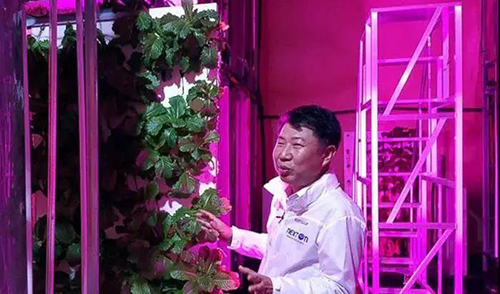 A vertical farm in Scotland reduces energy consumption by 50% with LED lighting
Recently, in Scotland, IGS launched Scotland's first vertical farm and claimed it is the world's most advanced indoor farm with its patented power and communication technology.
It is reported that IGS's vertical farm is located at the James Hutton Institute, and researchers work with the IGS team to explore the impact of different growing lights on crop yield and quality.
According to IGS, vertical farms can be monitored through a single platform. This solution will help reduce energy consumption by 50% compared to other indoor growing environments.
Vacant industrial land change indoor vertical farm
In Las Vegas, USA, a company called Oasis Biotech turned a vacant industrial site into one of the largest indoor vertical farms in the United States. Vertical farms have been serving restaurants in Las Vegas since opening last month. Due to the installation of LED lighting systems and a controlled indoor environment, the farm can grow fresh vegetables throughout the year.
The ultimate goal of vertical agriculture is to reduce water waste, eliminate pesticide use and shorten food miles, and reduce food waste by 90% by locally growing and growing fresh vegetables on demand.
Germany grows fruits and vegetables directly in the supermarket
The Metro chain supermarket in Berlin, Germany, cooperates with Infarm to promote the indoor vertical farm program, planting fruits and vegetables directly in the supermarket and selling them at the same time, so that customers can easily and personally harvest the fresh ingredients to be purchased.
Infarm is committed to growing food in a variety of impossible places, using old containers to create stackable modular planting boxes, via an internet-controlled irrigation and nutrient supply system, simulating sunlight. In order to help plant the LED lighting for photosynthesis, and to install a variety of sensing equipment to monitor the situation, consumers can also know the growth process of the food in real time through the network.
In the supermarket walkway cover vertical farm, it only takes up a few square meters of small space in the supermarket and can extend upwards and expands. The biggest benefit is that the supermarket infrastructure is complete, no need for any additional construction or adjustments, just install the system and start working. It is beneficial to consumers with many advantages such as reducing the transportation, storage and preservation costs of food materials, and is favored by consumers.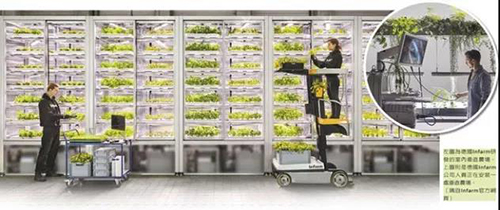 Dubai will build the world's largest vertical farm
According to media reports, Dubai is about to build the world's largest vertical farm. After completion, it will occupy 18.11 acres, but the output is equivalent to 5463.2 acres of farmland. Under full production, the plant produces 2,700 kilograms of high quality, herbicide-free, and pesticide-free green leafy vegetables per day, and water consumption is 99% less than outdoor planting.
There are about 26 vertical farms in Singapore
According to the Singapore Straits Times, strawberries grown in vertical farms in Singapore are now available in some supermarkets for 12 Singapore dollars per basket. Strawberries are warm and cool, while Singapore is tropical and not suitable for growing strawberries. It is often necessary to import strawberries from abroad. Today, with the high-tech of vertical farms, Singapore's strawberries can also be produced and sold. Although this price is not cheaper than imported strawberries, the farmer produces high-quality fruits and vegetables and sustainable agriculture. It can save long-distance transportation by selling and selling in Singapore, which not only ensures the freshness of fruits and vegetables but also is more environmentally friendly, even on price. There is no big advantage and it is more competitive than imported strawberries.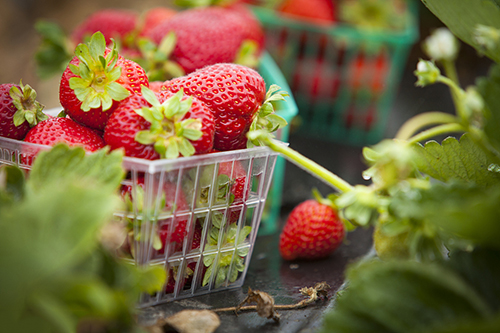
《Amazing!The World's First Underground Fully Automatic Plant Factory》
《Shock!Turning Waste Into Treasure!Waste Mines Turn Vertical Farms》Why do some vertical farms can not develop?
Despite the hot, there are always some vertical farms dead on the road, why?
1. The sales group is not clear
How do you use vegetables grown in vertical farms? How do you supply them? How to sell? In other words, if you can't sell them, then you shouldn't let them grow up. And when you identify the target group for sales, "sales ability" is especially important. Second, when you know who to sell, you should make the farm produce as close as possible to the demand side, thus shortening the supply chain. Finally, consider the supply capacity of the site, which is related to the ability of the site to support a large amount of power under various heating, ventilation and disinfection equipment problems.
2. Cost: Once the city is selected as the main battlefield, how should the cost of the vertical farm be calculated? According to the data, in the Japanese market, 20%-25% of the production cost per ton of vegetables is the cost of electricity, including lighting, air conditioning, ventilation, water pump, and other costs. But this is not the highest. The highest cost is the depreciation rate of equipment investment and plant in the early stage, which accounts for 30%-35% of the total cost. These two parts add up to more than half of the total cost. But overall, the cost of electricity is bound to be lower and lower. According to the US Energy Information Administration report, LED lighting efficiency has increased by about 50% from 2012 to 2014 alone. By 2020, LED lighting efficiency can still be increased by 50% due to cost reduction. In fact, considering the cost should be measured by the overall economic model of a vertical farm, rather than just looking at the fixed input cost comparison, future sales, transportation, loss, price, and other factors should be taken into account.
three.
3.Price: Although the initial investment in electricity and hardware facilities accounts for more than half of the total investment, it is foreseeable that the hardware costs of vertical farms will decline year by year. Will the market emerge as a big player in vertical farms for the next three or five years? Experts believe that the ability to compete for quality and sales is important for big players. From the price point of view, the price of 500 grams is about 2-3 dollars, there is really no way to be as cheap as the vegetables bought in the ordinary market because the farm itself has the cost of the headquarters, and the distribution channels must also maintain profits. But the head consumer is acceptable to buy such high-quality vegetables at this price.
The key to success in vertical farms
There are several key factors for vertical farm investment to be lost, including crop selection, lighting selection and design, airflow design and climate control, plant spacing strategies, crop logistics and automation, irrigation and nutrition, and Material selection, data, sensors, controls and software as well as target audience and sales channels.
At present, the propaganda point of vertical agriculture is to make full use of space, and the output is much higher than traditional cultivation. However, the vertical agriculture cultivation mode makes it difficult to carry out outdoors. If it is cultivated outdoors, only the upper layer of the crop can be fully illuminated, while other crop layers that are not fully illuminated will have a low natural yield. This feature makes vertical farms rely primarily on LED growth lights to provide light energy, requiring customized spectra to promote crop growth.
Spectral ratio and specific dynamic control make LED growth lamps play an important role in crop growth in vertical farms. Different crops such as lettuce and carrots require different spectral “recipes”.
The development of indoor crop cultivation in plant factories is receiving increasing attention. Some investors believe that simply buying an empty warehouse and installing a plant growth lamp can produce a perfect lettuce product for profit, which often disappoints them. Next, let's share the important lessons that plant factory experts have learned in some successful plant factory projects.
Part 1: Suitable climate, lighting, and space
The key to the success of a plant factory is whether you have a grower and a deep understanding of indoor planting. New technologies and the Internet of Things bring significant opportunities for the development of plant factories, but without good growers, they will not be profitable. You can have good packaging and a very attractive marketing strategy, but ultimately the product itself will determine whether it is successful. Here are some key factors:
Crop selection
Lighting selection and design
Airflow design and environmental control
Plant planting density setting
Crop logistics and automation
Irrigation and nutrients
Data, sensors, controls and software systems
Matrix selection
Part II: Target Audience and Sales Channels
When we consider how to get the highest return on investment from a plant factory, we tend to focus on using the optimal light level (in moles or mol) in the facility to achieve the highest yield (in grams). Keep in mind that LED lighting is one of the highest parts of plant facility facilities and operating costs. Here are some valuable suggestions that can help you increase your lighting output and achieve higher yields.
Step 1: Determine the right climate
Many new plant growers tend to ignore the best climatic conditions for indoor planting. Assuming 50% of the electrical energy is converted into light, the other 50% is directly converted into heat. Proper air flow can remove this direct heat production, but the light absorbed by the crop is also indirectly converted to heat. Typically, crops remove this heat by evaporating water into the air, a process that causes the air to rise in humidity. In order to control the rise in humidity and temperature, it is necessary to start with the ventilation and air handling system of the plant factory. The lack of proper climate control and air handling systems can reduce crop yields, resulting in additional costs and later troubles for inefficient production. Step 2: Set precise lighting
After getting the right climatic conditions, how can you get the highest yield based on this? To this end, we have conducted hundreds of indoor planting research projects focusing on the relationship between yield and optimal light intensity for a particular crop or variety. However, production is not always the most critical or only important. Let's take red oak lettuce as an example. When this lettuce is planted in the wild, it is red due to strong sunlight or large temperature difference, and its yield is lower than that of the corresponding green variety. When the same variety is grown indoors, most of it will remain green due to the absence of UV light, but it does grow rapidly and exhibits a growth comparable to or better than green products. Step 3: Set the appropriate spacing
The indoor planting spacing strategy is another way to increase the yield/light output ratio. It is necessary to make room for the plants so that each plant can obtain the best amount of light and actually, provide the plants with fill light instead of on the growth rack. Understanding the ideal spacing avoids wasted investment in pitch-adjusting robots, which can be derived by comparing automation inputs with the yield gains. I believe that through the sharing of our plant factory experts, everyone will have a deeper understanding of the plant factory. Want to know more about plant factories? You can browse the following articles:《How To Grow The Plants With LED Grow Lights?》
《Winter Is Coming,How Can Indoor Plants Survive?》
《How To Improve The Output of Greenhouse Vegetables?》
Incandescent: Not Brilliant
Before we understand how LEDs work and why they are more energy efficient, let's take a look at traditional incandescent lamps, how light bulbs shine.
If I tell you that all the objects around us are shining, you may be surprised. The common sense of life tells us that only stars in the sky can shine, even the moon is reflected light; in addition to electric lights, candles, etc. in life, do not see other objects are also shining?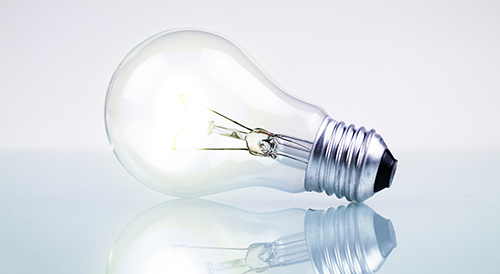 Scientists tell us that any object, as long as its temperature is higher than absolute zero, will radiate energy to the outside in the form of electromagnetic waves all the time. This is called thermal radiation. The wavelength of electromagnetic waves ranges from a few thousand kilometers to less than 1 nanometer, spanning a huge range, but only a narrow section of 400-800 nanometers can be perceived by our eyes. This is commonly known as visible light. So we can say that all objects, including ourselves, are shining.
However, an electromagnetic wave emitted by an object does not uniformly cover all wavelengths but is mainly concentrated near a certain wavelength, and the length of this wavelength is inversely proportional to the temperature of the object. For objects with temperatures around room temperature, the electromagnetic waves they emit are mainly concentrated in infrared rays longer than visible light, so the proportion of visible light is negligible. This is why we can't see these objects shining.
As the temperature of the object rises step by step, its thermal radiation will not only become more intense, but also the electromagnetic waves emitted will gradually become visible light, so these objects that would otherwise not be illuminated will become brighter. For example, when the electric wire is heated to several hundred degrees Celsius, it will be red, because the red temperature replaces the infrared light and the heat radiation dominates. If the temperature continues to rise to a few thousand degrees Celsius, the light of shorter wavelengths such as yellow, green, and blue in visible light is also released in large quantities. When the different wavelengths of visible light are mixed together, we see white light similar to sunlight, which is incandescent. Before the advent of incandescent lamps, people burned by burning firewood, lamp oil or various waxes. In fact, they are also using incandescence, but this time they use the high temperature generated by the chemical reaction. The incandescent lamp uses tungsten to flow current. Heat to above 2,000 degrees Celsius to produce a large amount of visible light.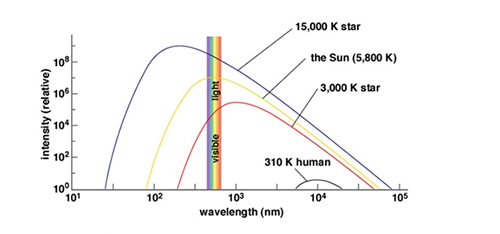 Fig.1 Comparison of thermal radiation of objects at different temperatures. From top to bottom, the curve is a star with a temperature of 15,000K (0K corresponds to -273.15 degrees Celsius), a star with a temperature of 5,800K (the sun), a star with a temperature of 3,000K, and A human body visible at a temperature of 310K. The horizontal and vertical coordinates are the wavelength (in nanometers) and the relative intensity of thermal radiation, respectively, and the narrow color band parallels to the ordinate indicates the range of visible light. It can be seen that the temperature of the object must be high enough to emit a large amount of visible light.
Incandescence is only a "by-product" when an object is heated, and it is not very cost-effective to heat the incandescent lamp to consume a lot of electrical energy to heat the filament to a very high temperature. Since all the electromagnetic radiation emitted by the heat radiation covers a wide wavelength range, the incandescent lamp emits a large number of infrared rays, ultraviolet rays, etc. while emitting visible light, which does not help to provide illumination but consumes a large amount of energy.
The incredible efficiency of incandescent lamps not only wastes a lot of power but also generates a lot of headaches. This heat is transferred to the environment, which may make the user feel uncomfortable. It can easily raise the temperature of the surrounding materials, cloth and other combustible substances above the ignition point, posing a great fire risk. In addition, at temperatures as high as several thousand degrees Celsius, many substances that are stable at room temperature become very active, which means that the filament is easily damaged. Although modern incandescent lamps use a tungsten wire with a very high melting point and evacuate the inside of the bulb or fill it with an inert gas to prevent oxidation of the tungsten, the life of the incandescent lamp is not long, generally not more than 1,000 hours. In other words, even if the quality of the light bulb is good, only 3-5 hours of lighting will be provided every day, and it must be replaced in about one year.
Therefore, although incandescent lamps have made an indelible contribution to the progress of modern civilization, it is still impossible to avoid the fate of withdrawing from the historical stage. At present, governments have already put out the elimination of ordinary incandescent lamps on the agenda, for example:Attention!The EU will phase out the halogen lamps in the next month!
In the next few years, incandescent lamps will gradually disappear from people's horizons. So who will continue to provide us with lighting? That is the cold luminescence of the principle of luminescence.
More Efficient Cold Luminescence
We know that if you use your feet to kick a football on the ground, then the speed of each football flying is different because it is difficult to guarantee the same force every time. However, if this football is free to fall from the balcony on the second floor, it will always fall to the ground at the same speed. This is because we have overcome the attraction of gravity in the process of taking football from the first floor to the second floor, and football has increased its potential. When the football fell from the second floor, the added potential was released, giving the football speed. Since the height of the floor is fixed, the added potential energy is also fixed, and the speed at which the football is landing is naturally the same.
We also know that atoms are composed of electrons outside the nucleus and the nucleus. The atoms that make up the molecules are these electron interactions that hold different atoms together. Whether in atoms or molecules, these electrons live in a tall building, and each floor of a tall building is called an energy level; the higher the floor, the higher the energy. Generally speaking, when e-staying in such a tall building, it always starts from the highest energy “first floor” and gradually occupies the upper floor. When all the electronics are checked in, there will be many floors in the building. Suppose the electrons in a molecule occupy 1 to 10 layers of the building. If we move the electrons that are in the lower layer to the upper layer, the electrons also add energy to the process. If you let this electron back to the lower layer, then the extra energy will be released, but it will not increase the speed, but release the electromagnetic wave. If the wavelength of the electromagnetic wave is just in the range of 400 to 800 nm, the electron emits visible light during this movement. At the concert, the fluorescent stick that the fan is waving is a typical example. When the fluorescent rod is bought, it does not emit light. Once we bend it, the chemical substances originally separated by the inside of the fluorescent rod are mixed together to form a chemical reaction; the energy released by the reaction makes some electrons low in energy. The state enters a state of high energy, and when they return to a state of low energy again, the light is released. Figure 2 A common principle of cold luminescence: electrons first absorb energy from the outside, enter the state of higher energy from the state of lower energy; then return to the state of lower energy, and release excess energy in the form of visible light.
The glow stick that is emitting light is not as hot as a lit incandescent lamp, so illumination like a fluorescent stick is often referred to as cold illumination. Cold lighting does not require heating objects to very high temperatures like incandescent lamps, so the utilization of energy is naturally higher. Another unique feature of cold luminescence is that it does not generally cover a wide range of wavelengths like incandescent luminescence, but instead concentrates on a particular wavelength. For example, a yellow fluorescent rod will never emit red or blue light, and it will not emit infrared rays and ultraviolet rays that are not helpful for illumination. This is also an important reason why the utilization of energy by cold light is higher than that of incandescent light.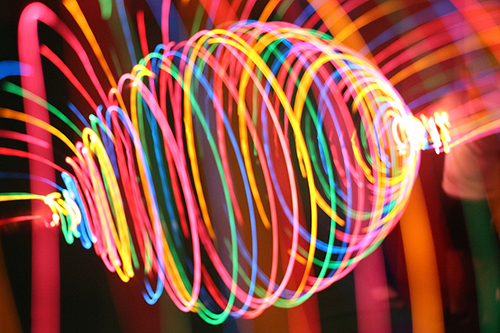 Figure 3 The glow of a fluorescent stick is a typical cold glow. Usually, the fluorescent rod can only emit light of one color, and the fluorescent rod emitting light of different colors can be obtained by changing the structure of the chemical substance in the fluorescent rod.
Fluorescent lamp: a model of cold lighting
The aforementioned fluorescent rods use chemical reactions to get electrons into high energy. We can also use light to supply energy to electrons. For example, when a banknote is placed under a UV lamp, we will find that some areas emit blue light because the electrons of certain substances in these areas absorb the energy of ultraviolet light, which produces cold light. Such cold illumination, which is powered by light, is called fluorescence or phosphorescence, and fluorescent lamps use this principle.
The inner wall of the fluorescent lamp tube is coated with a phosphor powder, and the ends are made of the tungsten filament. A small amount of mercury is added to the lamp tube, and an inert gas such as argon gas is charged. After the circuit is turned on, current flows through the filament, and a large number of electrons are released from the filament. These electrons collide with the atoms of the argon gas in the filament, causing some of the electrons in the argon to escape; and the argon atoms themselves are positively charged and become argon ions. These electrons and argon ions move from one end of the tube to the other, and the heat released during the movement changes the liquid mercury into mercury vapor, and the mercury atoms entering the vapor also collide with the electrons and argon ions. As a result of the collision, a large number of ultraviolet rays are released from the mercury vapor. The phosphor absorbs the energy of ultraviolet light and then produces fluorescence or phosphorescence. These substances emit no more ultraviolet light but visible light. In this way, the fluorescent lamp converts electrical energy into light energy through the cooperation of several processes.
Since the illumination is provided by the principle of cold illumination, the efficiency of the fluorescent lamp is much higher than that of the incandescent lamp, and 20-25% of the electrical energy can be converted into light energy. Fluorescent lamps also have a much longer life than incandescent lamps and theoretically provide at least 10,000 hours of illumination. However, people still do not meet such figures, so they have developed another kind of luminaire with the principle of cold illuminating - LED.
How Does The LED Shine?
To understand how LEDs work, we should first understand a problem, that is, some materials can conduct electricity, while others do not. A material that conducts electricity must have enough free-moving electrons. However, in atoms and molecules, electrons always stay in their own fixed position; the electrons of most materials require a lot of energy to break free and move freely. Such energy does not normally exist. Naturally, there are no free-moving electrons, and these materials cannot be electrically conductive. This is commonly known as an insulator. A small number of materials, such as metal, salt aqueous solutions, etc., due to the special structure, a large number of electrons can move freely, this is the conductor.
There are also some materials that are special, such as silicon. At room temperature, their electrons are similar to insulators and can only stay in their own position, unlike metal electronics. But unlike most insulators, the electrons in silicon do not require very high energy to get out of their own position, so the conductivity of silicon is higher than that of a normal insulator. Especially after the temperature rises, this energy becomes smaller, so these electrons are more likely to move freely. This material, which is electrically conductive between the conductor and the insulator, is called a semiconductor.
However, in practical applications, letting silicon conduct electricity does not require heating, but rather "doping". That is, introducing other elements into the silicon so that their atoms occupy the original position of the silicon atoms. So how does doping improve the conductivity of silicon?
We know that an atom wants to combine with another atom to form a molecule. Generally, two atoms need to each take out an electron to form a chemical bond. There are a total of 14 electrons per silicon atom, but only 4 electrons can be combined with other atoms, which means that when a silicon atom forms a crystal, each atom can be combined with another four silicon atoms. If silicon is doped with phosphorus or arsenic, both elements have 5 electrons that can be combined with other atoms, while the surrounding silicon atoms only need 4 electrons, so the extra electrons are unconstrained. The crystal of silicon moves freely. If there are enough phosphorus atoms doped, a large number of electrons will move freely in the crystal of silicon, and the conductivity of silicon will increase. A semiconductor that generates free electrons by doping like this is called an N-type semiconductor.
What if boron or gallium is doped into silicon? Both of these elements can only take out 3 electrons, but silicon requires 4 electrons, so there is always a certain silicon atom that does not get enough electrons, which forms a hole. The only way to fill this hole is to "remove the east wall and make up the west wall" - grab an electron from the silicon atom next to it. The holes are created next to each other. This new hole naturally digs electrons from the silicon atoms next to it - this keeps tossing, which is equivalent to the holes constantly moving in the crystal of silicon. Equivalent to having electrons moving freely, silicon can, therefore, become conductive. A semiconductor that generates a moving hole by doping like this is called a P-type semiconductor.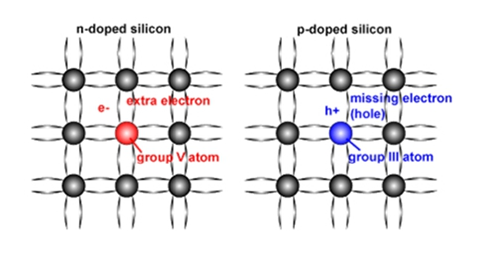 If an N-type semiconductor is brought into contact with a P-type semiconductor, the positive electrode of the power supply is connected to the P-type semiconductor, and the negative electrode is connected to the N-type semiconductor to form a complete circuit; then a large amount of negatively charged freedom exists in the N-type semiconductor. The electrons move through the P-type semiconductor to the positive side of the power supply. Similarly, positively charged holes in the P-type semiconductor will move through the N-type semiconductor to the negative side of the power supply. At the junction of these two semiconductors, electrons and holes meet.
The freely moving electrons in the N-type semiconductor are in a relatively high energy position, while the holes in the P-type semiconductor are in a relatively low energy position; when they meet, the electrons occupy the original position of the cavity, which is like a soccer ball. From the second floor to the first floor, more energy is available; and the excess energy of some semiconductor materials can be released in the form of light, so a light-emitting diode is born.
The basic principle of LEDs is the same as that of fluorescent lamps, which are cold luminescence; however, LEDs have higher luminous efficiency than fluorescent lamps and can convert 30% or higher of electrical energy into light energy, and researchers hope to increase this ratio. Up to 60%. When the fluorescent lamp is not lit, it is not as hot as an incandescent lamp, but it still makes us feel that it is hot. When the hand is placed on a light-emitting diode lamp, we almost never feel the heat, obviously, it means less. The electric energy is turned into heat energy and wasted. LEDs also have a longer life than fluorescent lamps and can last up to 20,000 hours without damage, and some can reach 50,000 hours.
In addition to being more energy efficient than fluorescent lamps, LEDs do not require the use of toxic mercury, which avoids the environmental hazards associated with mercury release. In addition, the structure of the light-emitting diode is also simpler than that of the fluorescent lamp, and thus is more compact; the convenience of use and the reduction of energy consumption during transportation cannot be ignored. Bibi, is the backlight of your computer monitor replaced by a fluorescent lamp to a light-emitting diode?
How does cold light emit white light?
Careful friends may have noticed that although there are many advantages to cold light compared to incandescent lamps, there is also a problem that only one color of light can be emitted. Monochrome lights are sufficient for indicators, lights, etc. However, if used for indoor lighting, monochromatic light can be uncomfortable. So how can we make fluorescent lamps and LEDs emit soft white light?
As we all know, white light is the result of mixing light of different colors in visible light. Therefore, in order to obtain white light by cold light, it is first necessary to generate light of different colors. If you want to change the speed of football landing from the second floor, you can stand on the second floor of different heights to let the football fall - different heights, the energy that football can release is different. Similarly, the "layer height" at which electrons are located can be adjusted by changing the molecular structure. The reason why we can see the fluorescent sticks of different colors is that the molecules with different "layer height" are added, and the emitted light is naturally different.
With fluorescent lamps or LEDs that emit different colors of light, we can combine them to form white light, but in fact, although white light contains many different colors of light, our eyes are only the reddest, green and blue. Sensitive, so only need to mix the light of these three colors in a certain proportion, it will produce the effect of white light. The combination of red and green light produces yellow light, so to produce a white light effect, you can directly mix the yellow and blue light. The two colors that produce a white light effect after mixing are commonly known as complementary colors. Fluorescent lamps and light-emitting diodes use complementary colors to produce white light.
The inner wall of the fluorescent tube is usually coated with two different fluorescent materials. When exposed to ultraviolet light, they respectively emit yellow and blue fluorescence, and after mixing, a white effect is achieved. A common white light-emitting diode encapsulates a blue light-emitting diode into a tube coated with a yellow fluorescent material on the inner wall. The blue light generated by the light-emitting diode excites the fluorescent material to produce yellow light, and the two combine to achieve a white light effect. A white light emitting diode is actually equivalent to a mixture of a light emitting diode and a fluorescent light. Another common white light-emitting diode is to package a light-emitting diode emitting three colors of red, green and blue to achieve a white effect. However, strictly speaking, fluorescent lamps and white light-emitting diodes do not emit true white light, but deceive our eyes in a clever way, making us feel the same as real white light. Let The Numbers Speak
I have introduced so many advantages of LEDs. How much can we save by using LEDs instead of incandescent or fluorescent lamps? Let's take a look at the estimates made based on the situation in the United States.
Suppose we have an incandescent lamp with a power of 60 watts. To achieve the same lighting effect, fluorescent lamps and LEDs need only 14 watts and 10 watts respectively. If you continue to provide 50,000 hours with these three types of lamps, that is, if you use them for more than 20 years with 6 hours of lighting per day, how much do you need to pay for each?
Incandescent lamps cost 50,000 hours of electricity to consume $300. In addition, incandescent lamps typically last 1,000 hours, which means we need to replace more than 40 bulbs in these 20 years. Although incandescent lamps are the cheapest of the three types of lamps, replacing such a large number of lamps is still a small expense, costing more than $50, and the total cost exceeds $350. Fluorescent lamps provide 50,000 hours of lighting for only $70. Although it is more expensive than incandescent lamps, due to its long service life, we only need to spend less than $20 to buy 5 lamps, so the total cost is greatly reduced. Only less than $90. LEDs that provide 50,000 hours of lighting require a lower electricity bill, only $50, but unfortunately, because of the current cost of LEDs, most of the electricity savings are offset by additional lamp spending. Even so, the total cost of providing illumination with LEDs is only about $86, still lower than fluorescent. It can be seen that incandescent lamps waste a lot of energy and have the lowest efficiency, while the use of fluorescent lamps and LEDs to provide illumination can significantly save energy and resources. With the continuous improvement of LED production technology, it is believed that the cost of LEDs will drop significantly, and by then it will bring us more benefits.
Maybe you will think that the difference in a light is negligible, but don't forget that there are countless fixtures around the world that provide illumination. In the United States alone, more than 10% of electricity is used for lighting every year. If efficiency is improved, the energy and resource savings will be significant. Numerous researchers are committed to developing LEDs that are more energy efficient and environmentally friendly than traditional luminaires so that we can better protect our homes while enjoying a better life.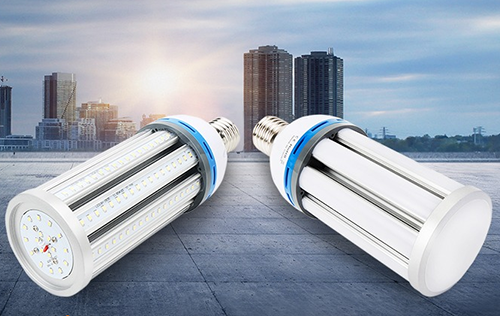 You may also want to know about LED lights:《What The Effects of Defferent Light Sources On Humans Health?》
《Why The LED Light Is The Most Cost-Effective?》
First, we need to consider the following before we choose the best-LED grow light
1) Spacing: You absolutely need to make sure that you know the amount of space to be covered with LED lights. Each lamp has a maximum range of space that can be covered. It is important to understand the measurement values of the LED plant lights.
2) Brand / Budget / Price:This will be important because higher quality lamps usually produce the best results. If you are a beginner, you may want to start with a lower price option. If you are more experienced, then choose a higher quality and higher price. Products can help you save more money.
3) Spectrum: Full-spectrum LED growth lamps will play an important role in helping plants grow. You need red and blue spectra, and you need infrared and ultraviolet light.
4) Electrical Usage: Your LED lights need to be durable and highly efficient. A good LED should run at least 10-12 hours a day.
5) Lighting Control: Depending on the stage, you need to ensure that your plants receive the right amount of illumination (until the precise hours). For information on growing LED lights, please refer to the following stages:
Seedling period: open for 16 hours, close for 8 hours
Plant growth period: 18 hours on, 6 hours off
Flowering period: 12 hours on, 12 hours off
Once you understand and consider the above, you can start picking the LED growing lights in the market. How to choose 2018 best led grow lights? You can read the following article:《How To Choose The Suitable LED Grow Light For Our Plants》
《How To Control The Irradiation Distance And Time of LED Grow Lights》
Today we are important to analyze how to install hanging plant lights:
LED Grow Par Lights
The plant lamp is more suitable for small-scale home planting, so it is also very convenient to install and use. The plant's lamp heads are now dominated by E27 / E40, so sockets are also very common on the market. 1. When we purchase such a similar lamp, directly remove the cover on the lamp cap (the lamp cover is to protect the lamp cap)
 and take care not to use too much force when it is taken down, otherwise, it is very easy to damage the plant lamp.
 2. After removing the plant lamp, check whether the appearance of the lamp is complete. If there is any damage, please contact the corresponding customer service staff.
3. After confirming that the luminaire is intact, screw the plant light into the E27 / E40 socket and turn on the power to directly illuminate our plants.
LED Grow Panel Lights
LED grow panel lights are generally used in 4x4 plant tents or in larger greenhouses, and the panel lights are bulky and heavy, so special care is required when hanging plant lights.
1. Carefully remove the plant light from the box and check that the lamp is complete.
2. Prepare the lanyard and plug
3. Installation hook
4. Hang onto the tent (when the light is too heavy, it is best to ask someone to help, hold the plant light when hanging, to avoid the lack of strength when a person hangs, the plant lights break, threaten personal safety)
5. Confirm that the suspension is correct
6. Insert the plug, power on, use
Recently, the University of Nottingham has proposed the concept of “vertical farm” for the future application of waste mines. It believes that mines are ready-made greenhouses, and only need to add new lighting and irrigation systems to become fully functional farms. They believe that deep farms are not affected by the weather and that the temperature of the ground does not change much and does not require expensive temperature control equipment. The University of Nottingham experts mentioned: “Tunnels and shafts do not need heating equipment, and even if they do, they consume less electricity, so they are very attractive for food production. We designed a central shaft for mounting the robot arm. With these robotic arms to take care of crops and harvesting, the entire system requires only about $38,000 in construction costs, and the subsequent operating costs are lower, while the LED plant lighting systems used in tunnels and shafts are environmentally friendly and power-hungry. ”
Scholars at the University of Nottingham invented the vertical farm, which only needed an intermediate shaft and installed a robotic arm to take care of the fruits and vegetables inside. Vertical farms are suitable for vegetables and fruits with short growth cycles such as spinach, kale, basil, mint, strawberries, mushrooms, carrots, eggplants, etc. Through repeated trials, a small well-type small farm can produce 80 tons of crops per year, and the production is not affected by the season and can reach 10 crop cycles per year. At present, the annual outdoor crops in the UK are only 4-6. Times. Researchers believe that the UK, with more than 150,000 abandoned coal mines, is a perfect starting point.
In fact, the abandonment of coal mines into vertical farms is a starting point for the UK and a true innovation for the world. According to reports, the number of casualties caused by abandoned mines in the United States from 2001 to 2017 For 278 people, an average of 16 people die each year! The number of abandoned mines in China will reach 12,000 by 2020, calculated according to the underground resource space of each mine of 600,000 cubic meters, which is equivalent to the space of a city with a population of 10 million. It is believed that with the maturity and promotion of this technology, more abandoned mines will be better utilized and truly benefit humanity. You may also be interested in the following article: 《Pay Attention To The Following Points: Say Goodbye To Huge Electricity Bills!》
《Amazing! The World's First Underground Fully Automatic Plant Factory》
《The Wasted Carton Recycling Use, Make A Small Greenhouse Now!》
It is no longer a new thing to cultivate leafy vegetables with artificial light and nutrient solution. Many Japanese companies use the waste factory to “plant vegetables”. A plant factory in Chiba Prefecture, near Tokyo, differs in that the boxes from which the seedlings are grown are transported to the plant factories in the underground space, and the vegetables that are finally grown are sent to the ground by conveyor belts to achieve full automation planting vegetables.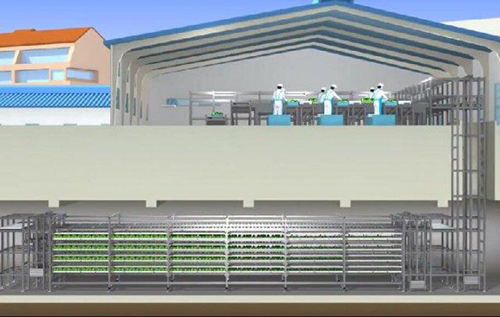 This is the world's first underground fully automated plant factory, located in an idle underground municipal complex. The top of the underground tunnel of about 3.1 kilometers is about 5 meters from the ground, the interior is 6 meters to 8 meters wide, and the height is about 4 meters. It was first built in 1995. It was originally planned to be used in the local municipal integrated pipe network and was left unused. Ito Electric Co., Ltd., which develops automation equipment, cooperates with the Chiba Prefecture Corporate Land Administration to utilize this idle underground tunnel. In December 2017, this unique plant factory was built.
According to Okada Akira, head of the Plant Factory Development Headquarters of Ito Electric Co., Ltd., starting from December 2017, the plant factory began to test and cultivate 200 vegetables per day, including leafy vegetables such as lettuce and edible flowers. According to the plan, by 2020, the factory can enter the mass production period and produce 2,500 per day. By 2022, the daily output will be further expanded to 5,000. By then, the underground plant area will reach approximately 3,200 square meters, and the above-ground working area will reach approximately 600 square meters.
It is reported that part of the tunnel has been opened up as a fully enclosed plant growing area with an area of about 120 square meters. Through the plastic wall curtain, some vegetables such as lettuce can be seen layered inside.
According to Okada Akira, the plant has been fully automated. After cultivating the seedlings on the ground, the modular vegetable box is sent underground through the conveyor belt. The LED grow light and nutrient solution transport in the underground plant can be completed automatically. The underground plant factory can be transported to the ground for sale after 24 days of cultivation.
The staff also brought freshly harvested lettuce to the reporter for tasting. Due to the complete cultivation in a non-polluting environment, these lettuces can be eaten directly without washing, and the taste is also very good.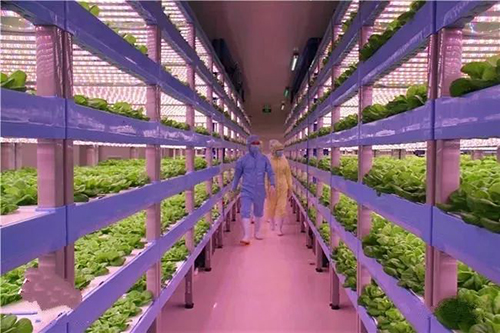 Okada said that the vegetable sales price of the plant is now the same as that of ordinary lettuce, and there is room for further cost reduction in the future. When the daily output reaches 5,000, the ground only needs about 10 staff for seedling, harvesting and equipment maintenance. In the future, they plan to develop more automation equipment, with the goal of reducing costs by 20% to 30%.
According to Toshihiko, the deputy director of the Chiba County Enterprise Land Administration, plant factories usually need to consume a lot of electricity for temperature control and lighting, but this plant is set up in an underground tunnel, constant temperature and humidity throughout the year, which can save a lot of air-conditioning electricity costs. . In addition, due to the close proximity to the consumer market, the vegetables produced do not need to be transported over long distances, saving a lot of logistics costs.
About the plants, maybe you also interested in the following articles:
《The Wasted Carton Recycling Use, Make A Small Greenhouse Now!》《New Trends In Plants Lighting, Corporate Development Attracts Attention》